

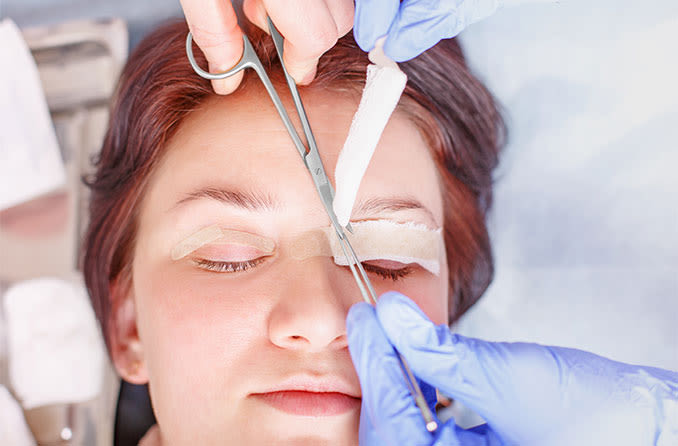
If you are looking for an effective treatment for ptosis, but are anxious about going under the knife, turning to non-surgical ptosis treatments may be an enticing option. Aesthetic methods like high intensity focus ultrasound (HIFU), laser skin resurfacing, and radiofrequency are some alternatives that are available in Singapore.
A question that is asked by many patients about non-surgical methods for treating ptosis is whether these technologies only tighten the surrounding skin or do they truly lift droopy eyelids? The honest answer to this depends on the root cause of your drooping eyelid symptoms, its severity, and your realistic expectations.
What Are the Different Causes of Droopy Eyelids?
There are many different causes of droopy eyelids. By identifying and understanding the underlying cause of your condition, your doctor can accurately design a treatment plan that uses the right approach for your ptosis correction. There is no single universal treatment for ptosis since droopy eyelids are not all the same.
Dematochalasis vs True Ptosis
Dermatochalasis: Excess eyelid skin that sags
Dermatochalasis, which causes pseudoptosis, is referred to as excess, loose skin surrounding the upper eyelids. This develops over time as we grow old when the body gradually loses its ability to produce sufficient collagen and elastin. Hence, the skin loses its firmness and may fold over the eyelid’s natural crease. Aside from natural aging, genetics and sun exposure also play a part in this occurrence.
You may notice skin sagging around your eyelid area when you reach your 30s or 40s. When your symptoms mainly involve excess loose skin, then non-surgical skin-tightening treatments may be able to bring improvements to your lids.
True Ptosis: When your eyelid itself droops
True ptosis happens when your eyelid’s upper margin sits quite lower than its normal state. This usually occurs when the levator muscle becomes weak, damaged, or stretched. Real ptosis may originate from birth or it can develop with age, certain medical conditions, or injury to the eye.
Real ptosis, unlike loose skin, affects the mechanism used for lifting your eyelid. Non-surgical ptosis treatments, such as HIFU, laser, and RF cannot efficiently fix this underlying cause.
Knowing exactly what causes your eyelid droop matters before choosing the course of your ptosis treatment. If you notice any issues with your eyelid and your vision is being compromised, it is important to consult with a medical specialist first instead of assuming that an aesthetic device can address your concern.
What type of non-surgical eyelid lift treatments are available in Singapore?
For patients with dermatochalasis or pseudoptosis symptoms, a non-surgical ptosis treatment may be beneficial to improve mild-to-moderate skin laxity. These treatments primarily work to stimulate the production of collagen in the skin around your periorbital area to tighten it and lift the brow line naturally.
1. High Intensity Focused Ultrasound (HIFU)
A popular choice for skin lifting is micro-focused ultrasound, such as high intensity focused ultrasound (HIFU). This type of technology works by delivering focused ultrasound energy at certain depths in the skin with accuracy to reach the superficial musculoaponeurotic system (SMAS) layer, which is the same layer accessed by surgeons to lift skin during surgery.
How does it work?
Targeting your brow bone and upper periorbital region, the powerful device generates ultrasound waves that create localized, precise points of heat (between 60℃ and 70℃ ). This warmth is controlled and begins to activate the body’s natural healing process, triggering the production of new collagen and elastin. As a result, the heavy pressure that is pulling the brow downward is lifted, which effectively opens up your eyes.
Downtime and maintenance
The results of HIFU may be subtle after the treatment, but it gradually improves in the next 2 to 3 months. This non-surgical ptosis treatment requires no down time, making it a convenient choice if you have a busy lifestyle. However, you may need to repeat the same procedure after a couple of months if you wish to extend its effects.
2. Fractional Radiofrequency and Radiofrequency Microneedling (RF)
Another powerhouse in non-invasive tightening of the skin is radiofrequency energy. Fractional radiofrequency and radiofrequency microneedling differ from standard RF. Fractional RF and RF microneedling have advanced systems that deliver energy through microscopic needles or pins directly into the dermis by penetrating it, while standard RF uniformly heats the dermal layers only.
How does it work?
Micro-injuries to the skin are created by fractional RF devices while heating the underlying structural tissues of your eyelid’s skin. This dual-action technique allows the skin to remodel, smooth fine lines, and tighten any sagging skin on the upper eyelids simultaneously.
Downtime and maintenance
Fractional RF and RF microneedling require minimal downtime. You may notice immediate changes following 1 session and further improvements like firmer eye contour and improved skin texture after 3 to 4 sessions.
3. Laser Technology
Energy-based resurfacing devices, such as fractional lasers, use a different approach to rejuvenate and tighten eyelid skin. Results are achieved by combining skin firming methods and superficial resurfacing.
CO2 lasers or Erbium lasers are examples of fractional lasers used for non-surgical ptosis treatments. These powerful aesthetic machines produce columns of microscopic thermal damage to vaporise old micro-damaged skin, which then forces your body to replace it with smooth, tight epidermal tissue.
Downtime and maintenance
While this type of procedure can obtain satisfactory results, it has to be performed by an expert as ablative lasers directed around the eye area require careful management. This treatment will also need some social downtime for rest and recovery.
What can you expect during an initial consultation for non-surgical ptosis treatments in Singapore?
You must undergo a comprehensive evaluation with an experienced and qualified aesthetic doctor or an oculoplastic doctor before choosing the right non-surgical ptosis treatment. An extensive assessment of your symptoms can help your doctor determine if your droopy eyelids are indeed caused by skin laxity instead of structural muscle dysfunctions, which generally requires surgery.
Some factors to keep in mind when choosing a non-surgical ptosis treatment
- Improvements are gradual. Surgery offers dramatic and immediate change, which is the reason why it remains the best option for fixing droopy eyelids. However, non-surgical ptosis options may also produce optimum results, although the improvements appear gradually after a few weeks and months.
- Effective combination approaches. Many ptosis clinics in Singapore combine various non-surgical ptosis treatments to achieve better periorbital rejuvenation. An example of which is the combination of fractional RF for skin texture with an ultrasound brow lift.
- Maintenance. The results of non-surgical ptosis treatments, unlike surgery, are temporary. As you continue to age naturally, the skin around your eyelid will continue to lose elasticity. Typically, annual maintenance is recommended to maintain your desired results.
Final Word
A drooping eyelid does not automatically indicate that you need surgery to fix your condition. Your symptoms may point to early signs of aging like skin laxity and brow descent, which can be improved by non-surgical ptosis treatments, such as HIFU, laser, and RF microneedling. By visiting a trusted medical professional, your treatment can be planned using powerful aesthetic devices to reach your favoured outcome.
Allure Plastic Surgery – Dr Samuel Ho
435 Orchard Road #22-04 Penthouse Floor
Wisma Atria Singapore 238877
Phone: + 65 6734 9988
